
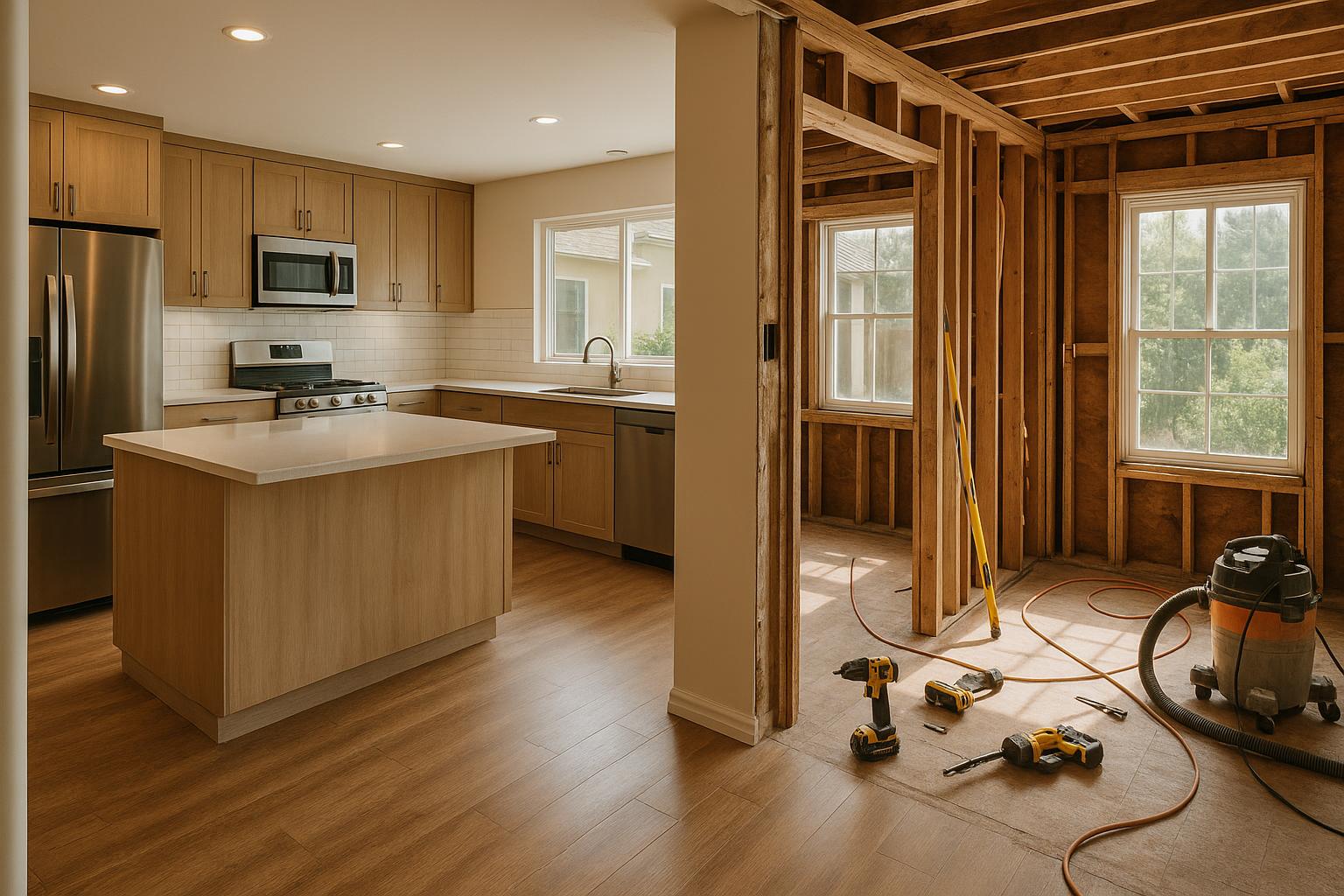
The Big Question Every San Diego Homeowner Faces
You know your home needs work. The kitchen cabinets are outdated, the basement sits unused, the bathrooms feel cramped, and the flooring throughout the house has seen better days. But now comes the hard part: do you rip everything out and renovate the whole house at once, or do you take it one room at a time?
It's one of the most common questions we hear from homeowners across San Diego, from older homes in Point Loma to mid-century ranches in Clairemont. There's no single right answer — but there is a right answer for you, and it depends on your budget, your timeline, your living situation, and the scope of work your home actually needs.
Let's break down both approaches honestly so you can make a decision you won't regret.
What Counts as a Whole Home Renovation?
A whole home renovation means tackling multiple rooms and systems in a single project. This could include kitchen and bathroom remodels, basement finishing, new flooring throughout, updated electrical and plumbing, and even structural changes like opening up floor plans or adding square footage.
The key distinction is that everything happens under one contract, one timeline, and one coordinated plan. Trades overlap, materials are ordered together, and the entire home is treated as a single project rather than a series of isolated updates.
What Does Room-by-Room Remodeling Look Like?
Room-by-room remodeling is exactly what it sounds like: you prioritize one space, complete it, live with it for a while, and then move on to the next project when your budget and schedule allow. Many San Diego homeowners start with a kitchen or bathroom remodel, then circle back months or even years later to finish a basement or update their flooring.
This approach gives you more flexibility and smaller financial commitments at each stage, but it also means living with an unfinished vision for longer.
Comparing the Two Approaches
Cost
Whole home renovations typically cost more upfront, but they can actually save you money in the long run. When a contractor mobilizes once instead of multiple times, you avoid repeated setup costs, permit fees, and material delivery charges. Buying materials in bulk — like flooring or fixtures — often means better pricing. And when trades are already on-site, adding scope is more efficient than bringing them back for a separate project later.
Room-by-room remodeling spreads costs over time, which can be easier on your cash flow. However, the total cost of renovating every room individually often ends up 15-25% higher than doing it all at once, simply due to repeated overhead and lost efficiency.
Timeline
A whole home renovation takes longer in total duration — typically three to six months depending on scope — but it compresses all the disruption into one period. Room-by-room projects are shorter individually (a few weeks each), but the cumulative disruption stretches over months or years.
For San Diego homeowners who can stay with family in La Jolla or rent a short-term place in Mission Valley during construction, a whole home renovation can actually mean less total time living in chaos.
Disruption to Daily Life
This is where the decision gets personal. A whole home renovation means your house is essentially a construction zone. You'll likely need to relocate or at least be prepared for significant daily inconvenience — no kitchen, limited bathrooms, dust everywhere.
Room-by-room remodeling keeps most of your home functional while one area is under construction. If you have young kids, work from home, or simply can't relocate, this approach might be the more realistic choice regardless of cost considerations.
Design Consistency
One often-overlooked advantage of whole home renovation is design cohesion. When everything is planned together, your flooring flows naturally between rooms, your color palette feels intentional, and architectural details like trim and hardware match throughout the house. It creates a home that feels unified rather than pieced together over time.
With room-by-room remodeling, tastes change, products get discontinued, and it can be difficult to maintain a consistent vision across projects that happen years apart. This doesn't mean it's impossible — working with the same contractor and designer helps — but it requires more intentional planning.
When a Whole Home Renovation Makes Sense
- You just purchased a fixer-upper and want to make it yours before moving in
- Your home needs significant system upgrades (plumbing, electrical, HVAC) that affect multiple rooms anyway
- You have the budget available through savings, a home equity loan, or renovation financing
- You can temporarily relocate during construction
- You want to maximize resale value with a cohesive, modern update throughout
When Room-by-Room Remodeling Makes More Sense
- Your budget is limited right now but you want to start improving your home
- Only one or two spaces truly need attention — the rest of your home is in good shape
- You can't relocate and need to maintain daily routines during construction
- You're not sure about your long-term plans and want to invest gradually
- You want to test a contractor's work on a smaller project before committing to something larger
A Hybrid Approach Worth Considering
Many of our San Diego clients land somewhere in the middle. They'll combine related projects — like a kitchen remodel with new flooring throughout the main level, or a basement finishing project paired with a downstairs bathroom renovation — while saving other updates for later.
This hybrid approach captures some of the cost efficiency and design consistency of a whole home renovation while keeping the project manageable in terms of budget and disruption. It's especially popular in neighborhoods like Ocean Beach and Clairemont, where homeowners are updating older homes in phases but want each phase to feel substantial and complete.
Questions to Ask Your Contractor Before Deciding
Before you commit to either approach, have an honest conversation with your remodeling contractor. Here are the questions that matter most:
- What's the realistic cost difference between doing everything at once versus spreading it out?
- Are there any system upgrades (plumbing, electrical, waterproofing) that would make it smarter to combine projects?
- What's the projected timeline for each approach?
- Can you phase the work so I can stay in part of the house during renovation?
- Will materials or products I choose now still be available if I come back for phase two in a year or two?
Making the Right Choice for Your Home
There's no universal answer here, and anyone who tells you otherwise isn't being straight with you. The right approach depends entirely on your home's condition, your financial situation, your tolerance for disruption, and your long-term plans for the property.
What we can tell you from years of remodeling homes across San Diego is this: the worst decision is no decision. Putting off necessary renovations rarely makes them cheaper or easier. Whether you go all-in with a whole home renovation or start with a single room that's been driving you crazy, the important thing is to start with a solid plan and a contractor you trust.
At High Point Basement, we help San Diego homeowners think through these decisions before a single wall comes down. If you're weighing your options, we're happy to walk through your home, talk through priorities, and give you an honest recommendation — even if that recommendation is to start small.